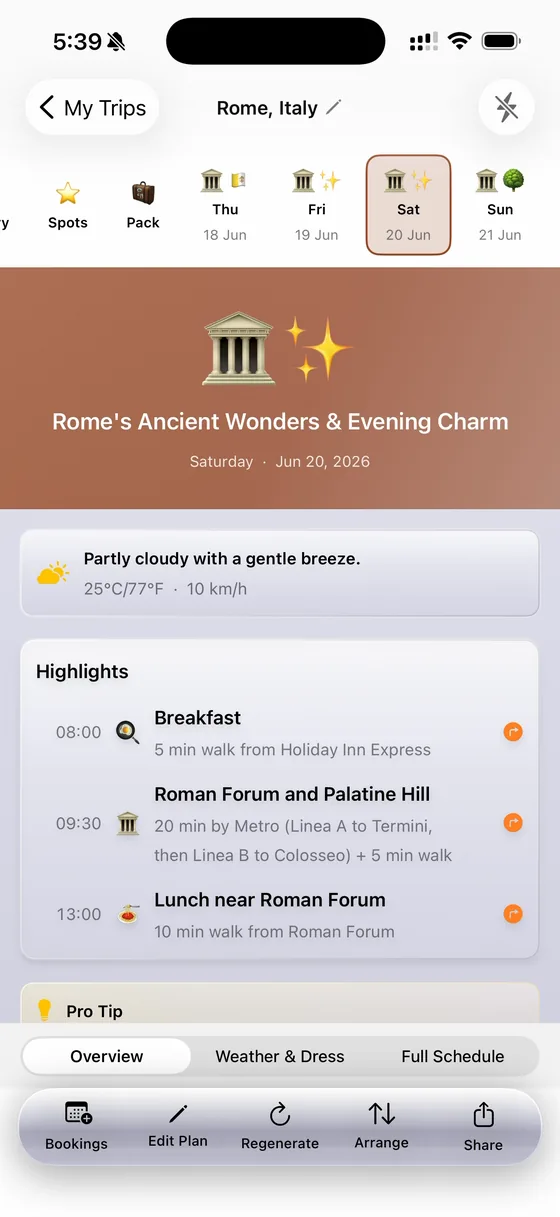
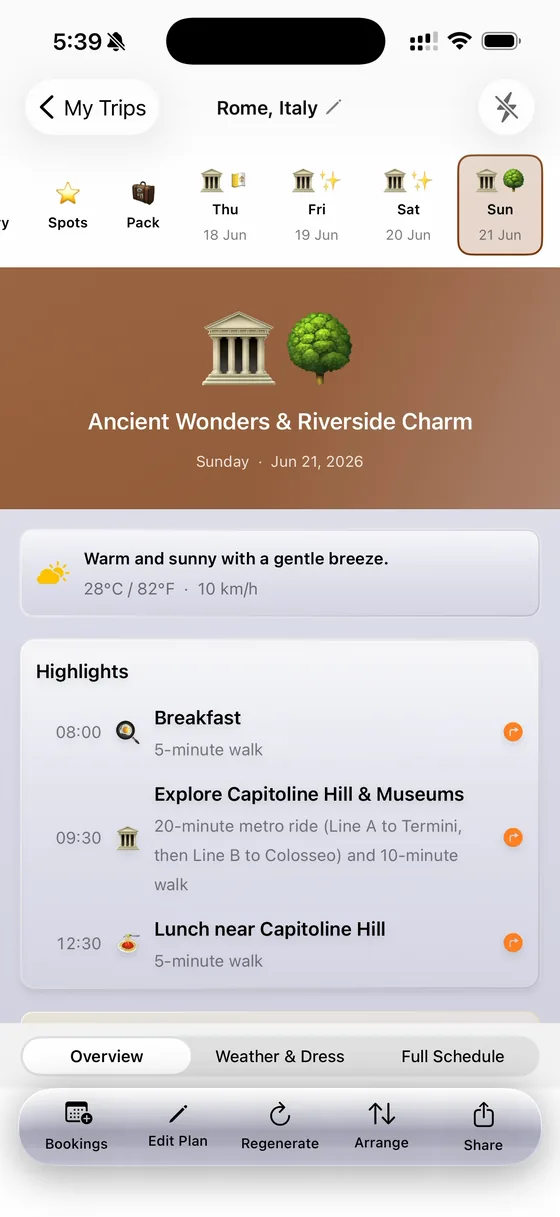
Destination guide

Plan a trip to Rome

Rome is the rare city where you trip over 2,000 years of history on your way to lunch — ancient ruins, Renaissance domes, and Baroque fountains all share the same crowded cobblestones. It's a place built for wandering, where the gelato is serious business and dinner starts late. Let our AI planner sort the logistics so you can focus on the pasta, the piazzas, and the late-evening glow on the Tiber.

📅 3–4 days🗓️ Aim for the shoulder seasons — April to early June, or late September through October — when the weather is warm but mild and the crowds thin out a little
🍎 Plan Rome free in the app → ▶ See how it works

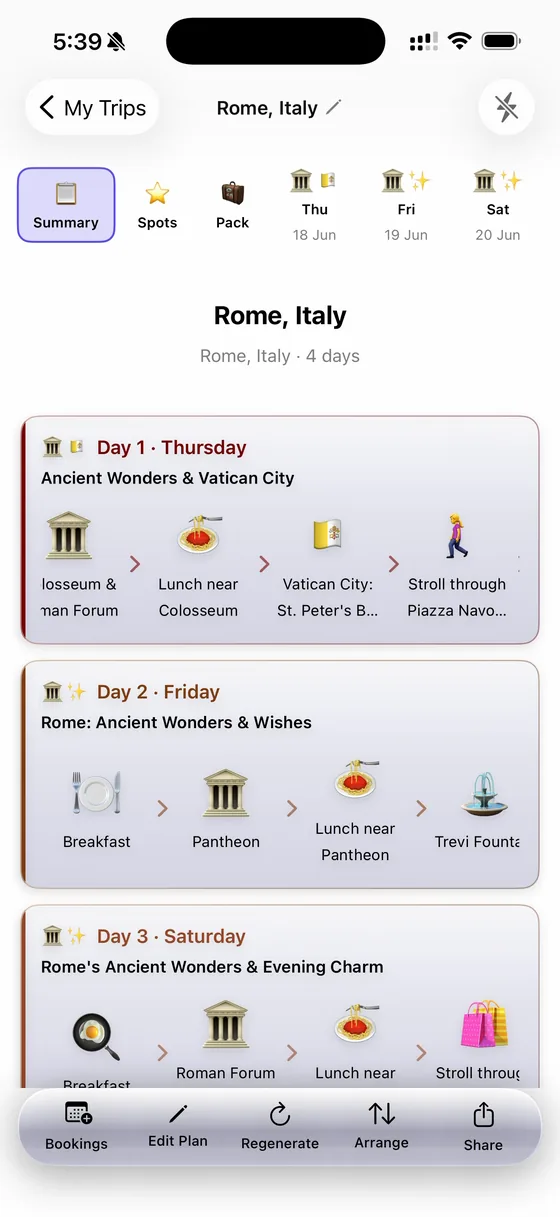
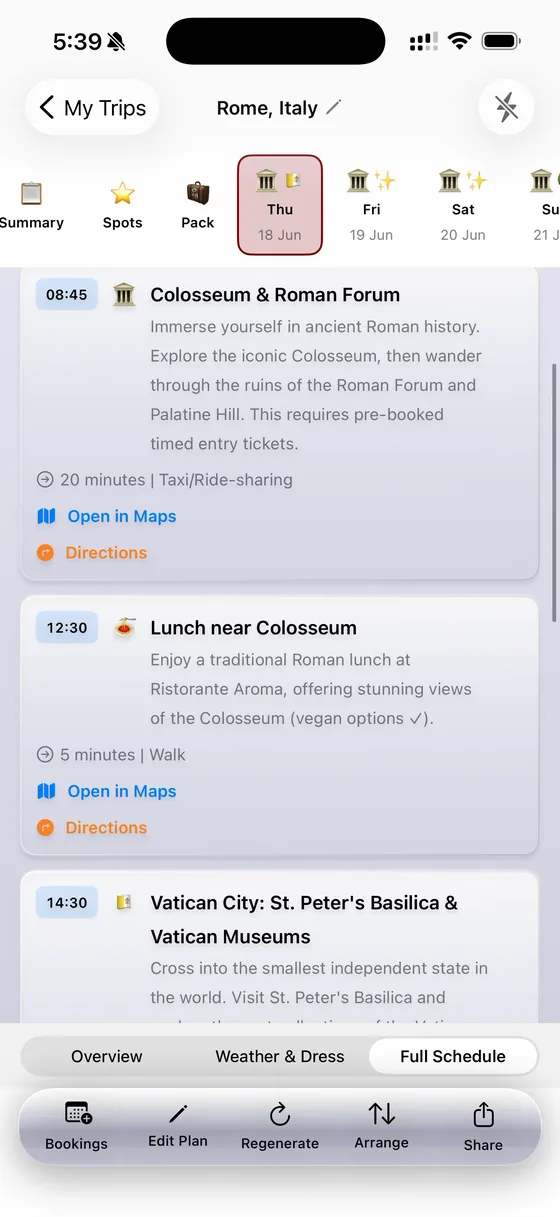
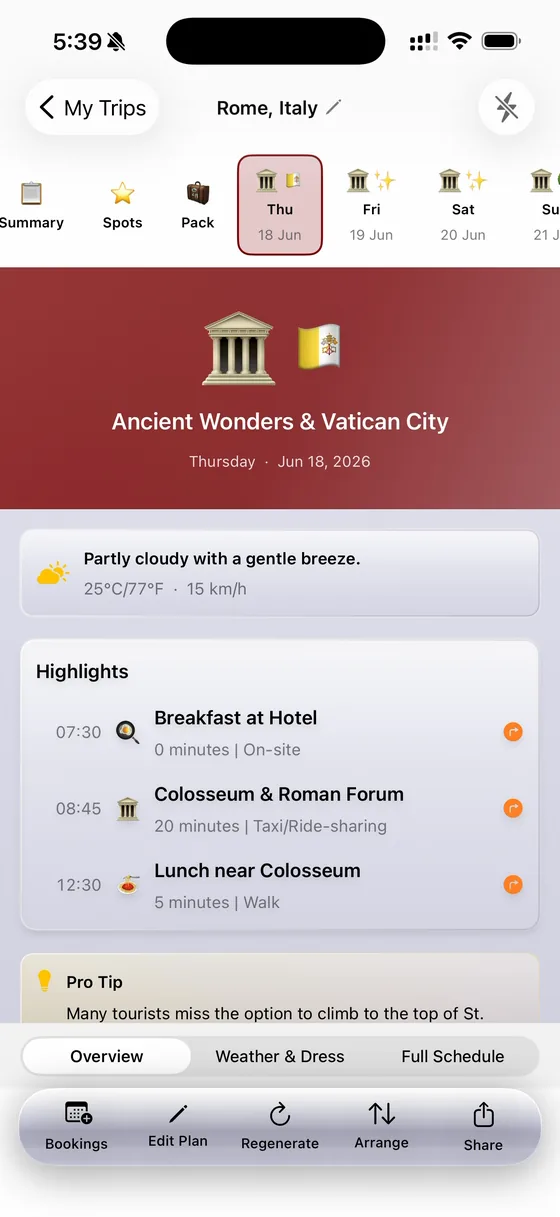
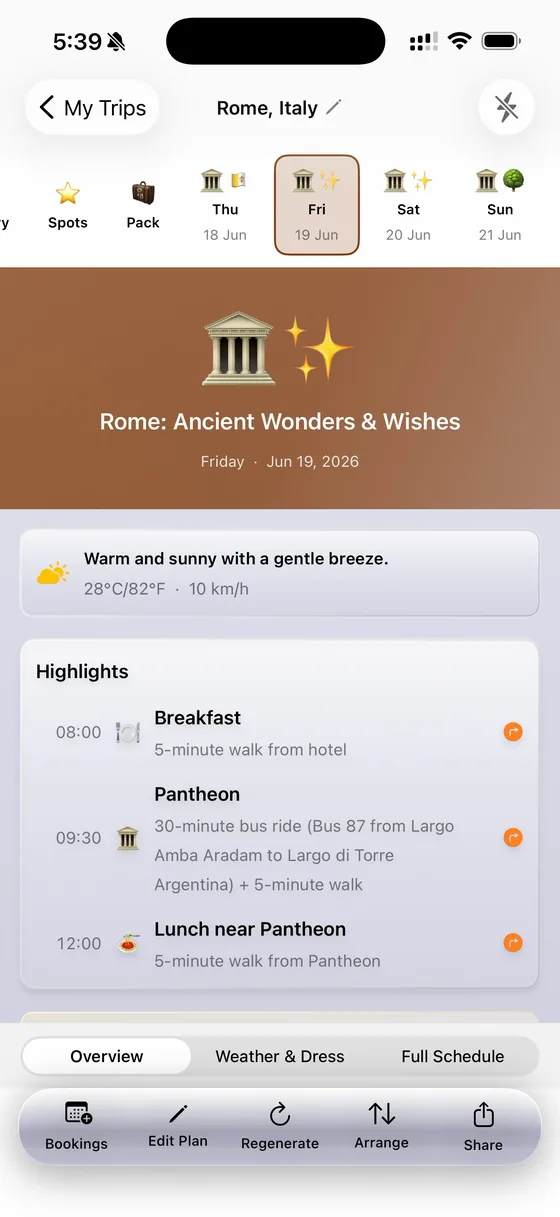
A sample 3–4 days itinerary

A ready-made starting point — open TripFlash, say what you like, and the AI tailors a plan like this to your dates and taste in under two minutes.

Day 1

Ancient Rome & the historic core

8:30 AM
Colosseum — stand inside the arena where gladiators once fought and the crowd roared.
💡 Book a timed entry online in advance; the combined ticket also covers the Forum and Palatine Hill.
10:30 AM
Roman Forum & Palatine Hill — walk the ruined heart of the empire and climb up for sweeping views.
💡 Wear proper shoes; the ground is uneven ancient stone and there's little shade.
1:00 PM
Lunch in Monti — duck into this leafy, low-key neighborhood just behind the Forum for a relaxed plate of pasta.
💡 Order cacio e pepe here — it's a Roman classic done simply and done right.
3:00 PM
Capitoline Hill & Piazza del Campidoglio — Michelangelo-designed square with one of the world's oldest public museums.
💡 Even if you skip the museum, the terrace beside it has a free postcard view over the Forum.
5:30 PM
Trevi Fountain — toss a coin into Rome's most theatrical Baroque fountain.
💡 Come back after dark when it's lit up and slightly less mobbed for better photos.
8:00 PM
Dinner near Piazza Navona — end the day among street artists and Bernini's grand fountains.
💡 Step one block off the main square to find better food at fairer prices.
Day 2

Vatican, art & the river

8:00 AM
Vatican Museums & Sistine Chapel — miles of masterpieces ending under Michelangelo's ceiling.
💡 Reserve the earliest slot you can; the galleries get shoulder-to-shoulder by mid-morning.
11:30 AM
St. Peter's Basilica — stand beneath the largest church in the world and climb the dome if your legs allow.
💡 There's a strict dress code — cover shoulders and knees or you'll be turned away.
1:30 PM
Lunch in Prati — the tidy grid of streets near the Vatican has solid, unfussy trattorias used by locals.
💡 Avoid the restaurants right on the basilica square; quality drops and prices climb.
3:30 PM
Castel Sant'Angelo — a former emperor's tomb turned fortress, with a rooftop river view.
💡 The bridge of angels out front is one of the prettiest spots in the city for a slow stroll.
6:00 PM
Trastevere — cross the river into Rome's most atmospheric tangle of ivy-draped lanes.
💡 Arrive before dinner to wander while the golden light hits the ochre walls.
8:30 PM
Dinner in Trastevere — long Roman meal in the city's liveliest evening neighborhood.
💡 Try a Roman-Jewish dish like fried artichokes (carciofi alla giudia) if it's on the menu.
Day 3

Piazzas, markets & hidden corners

9:00 AM
Campo de' Fiori morning market — fruit, flowers, and spice stalls in a working square.
💡 Grab a fresh-baked pizza bianca from the bakery on the corner for a cheap on-the-go breakfast.
10:30 AM
Pantheon — step inside the best-preserved building of ancient Rome and look up at the open oculus.
💡 Entry is now ticketed but cheap; the line moves fast, so don't be put off by it.
12:30 PM
Lunch in the Jewish Ghetto — one of Rome's oldest and most characterful quarters.
💡 This is the best part of the city for that famous fried artichoke if you missed it yesterday.
2:30 PM
Spanish Steps & the Tridente — climb the steps and browse the elegant streets fanning out below.
💡 Sitting on the steps to eat is actually fined — admire them standing or from a nearby cafe.
4:30 PM
Villa Borghese gardens — green, shady escape above the city for a slow afternoon walk.
💡 If you love art, book the Borghese Gallery weeks ahead; entry is strictly timed and limited.
6:30 PM
Pincian Terrace at sunset — finish with a panorama over the rooftops and domes of Rome.
💡 It overlooks Piazza del Popolo, an easy walk down to your last dinner in the city.

Best time to visit

Aim for the shoulder seasons — April to early June, or late September through October — when the weather is warm but mild and the crowds thin out a little. July and August are hot, packed, and many locals leave town; if you do come in summer, plan sightseeing for early morning and evening.

Practical tips for Rome

Rome trip FAQ

How many days do you need in Rome?
Three full days is enough to cover the big icons — the Colosseum and Forum, the Vatican, and the historic-center piazzas — without rushing. Add a fourth day if you want to slow down, visit a museum like the Borghese Gallery, or take a day trip out to Tivoli or Ostia Antica.
Is Rome expensive?
Rome is mid-range for a major European capital — pricier than southern Italy but cheaper than Paris or London. You can keep costs down by eating where locals do (a block off the main squares), drinking coffee standing at the bar, and walking instead of taking taxis. Major sights cost extra, so budget for tickets to the Colosseum and Vatican.
What's the best area to stay in Rome?
For first-timers, staying in or near the historic center (around the Pantheon, Piazza Navona, or Monti) puts you within walking distance of most sights. Trastevere is great for atmosphere and nightlife, while Prati is quieter and handy for the Vatican. Avoid basing yourself far out near Termini station unless you're prioritizing budget over location.

Get your own Rome plan in two minutes.

🍎 Download for iOS → 🤖 Join Android Beta →

More destinations

Paris

France

Tokyo

Japan

Barcelona

Spain

London

United Kingdom

New York City

USA

Dubai

United Arab Emirates